How to build a personal balance sheet
A personal balance sheet records the value of your assets and the debts you owe on a chosen date. Subtracting those debts gives your net worth, following the SEC's method for a net worth statement. Keeping the entries behind that total lets you check what changed at your next review.
1. Give each balance a date
Choose the date you want the sheet to cover. For every account, record its name and balance alongside the date shown on the statement. If one provider's figures cover an earlier period, keep that date visible.
2. Save the source beside the amount
For an investment account, note which statement you used. A car needs an estimated resale value, so record the guide or listing behind your estimate. Keep these source notes with your sheet so you can repeat the method next month.
Record each asset once. If a 401(k) appears as one account total, its holdings are already included in that entry. For a foreign account, retain the original currency and note the exchange rate used to convert it into dollars.
3. Add your debts and calculate the total
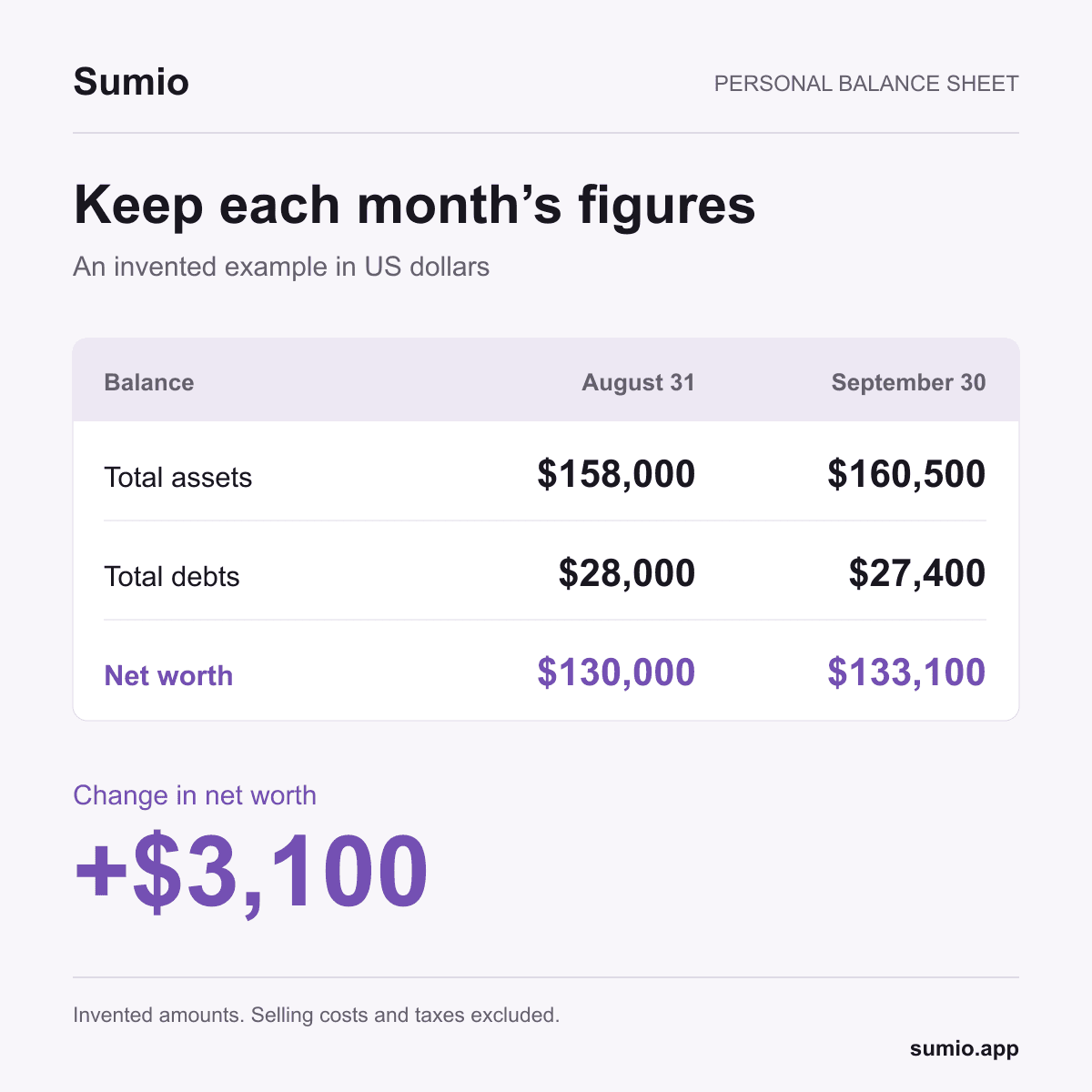
Enter each outstanding loan balance, then subtract total debts from total assets. This invented example shows two monthly records in US dollars:
| Balance sheet | August 31 | September 30 |
|---|---|---|
| Total assets | $158,000 | $160,500 |
| Total debts | $28,000 | $27,400 |
| Net worth | $130,000 | $133,100 |
These figures exclude selling costs and taxes. Keep both dated versions when you save the sheet.
4. Check the entries behind a change
The example's net worth rose by $3,100. Look through the individual balances to see where the change came from, keeping notes on transfers and any revised estimates.
Sumio calculates net worth from the assets and liabilities you enter and charts their values over time. During your next review, compare the balances you entered with the latest statements, then update any amounts that need your input.