Keeping a net worth spreadsheet up to date
An exchange-traded fund (ETF) keeps trading after you copy its price into your net worth spreadsheet, so check the date behind that price when you next review the total. A cell with a manually entered price holds that value until you change it.
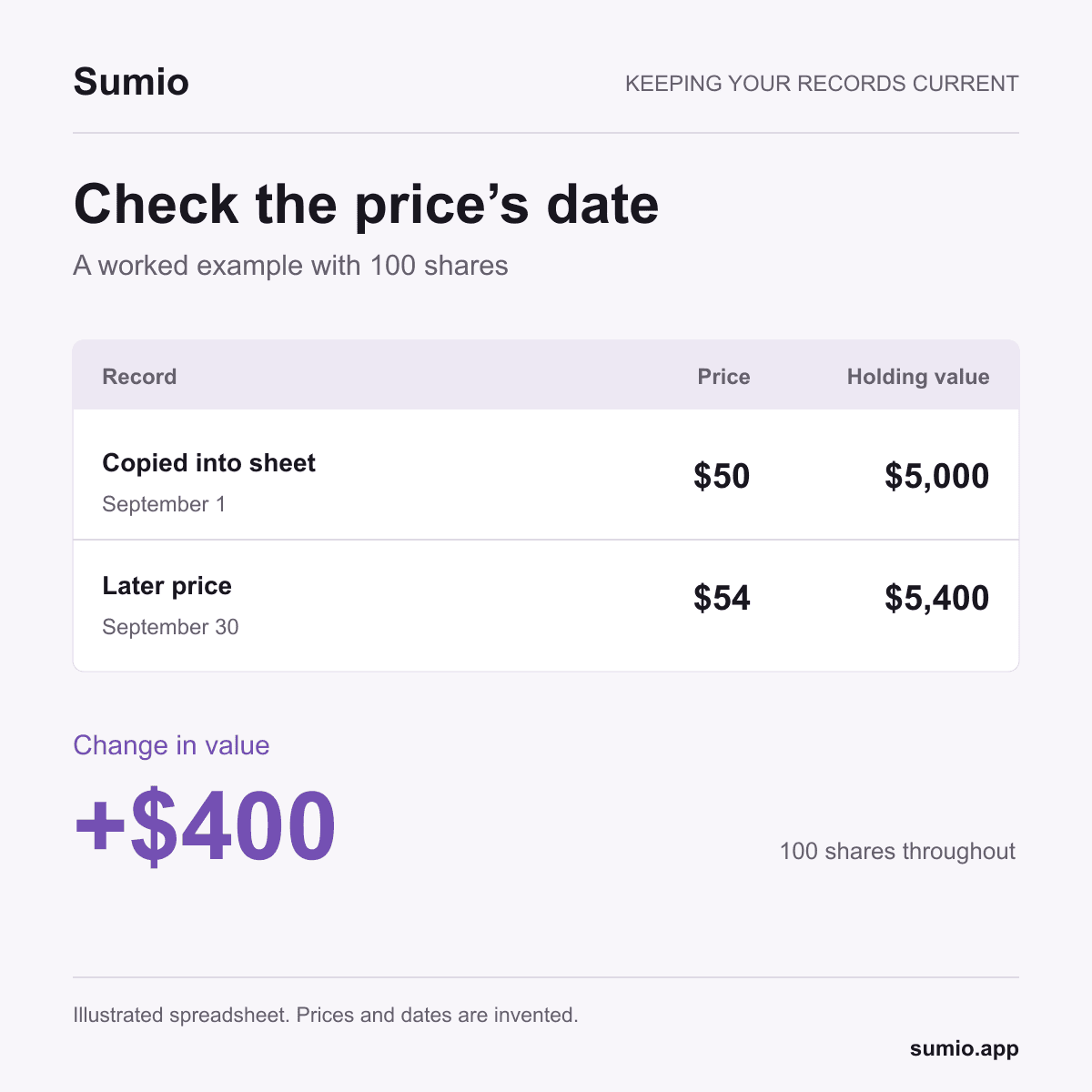
Take an invented holding of 100 shares. At $50 a share, the spreadsheet records $5,000. If the latest price is $54, the holding is worth $5,400, leaving the copied figure $400 behind. Your share count stayed the same throughout this example.
You can make the sheet easier to maintain by adding a column for the date each value was checked. Place it beside the amount so that an old estimate remains visible when you scan your accounts. Review the share count after purchases or sales, and verify whether the price comes from a data feed or a value you entered yourself.
Foreign assets add another date to check. A €10,000 balance converts to $11,000 at $1.10 per euro. At $1.15, the same balance comes to $11,500. Those exchange rates are invented for the example, which assumes you keep the full €10,000 throughout.
Sumio updates market values for supported investments and converts amounts into your chosen currency. You can import stock and fund purchases from an Excel file, then review the imported holdings against your statement. Market prices update separately from the quantities you own, so check those quantities after trading.
The app works without linking accounts. By default, your records are stored on your device; the privacy policy explains how optional features process data. If you use the AI Assistant, the request sends relevant financial context for processing.
Keep a review date for values that need your input, including a home's estimated price. For each account, compare the amount in your record with the latest statement and keep a note explaining any difference. An unsettled trade, for example, deserves a second check once it completes.